
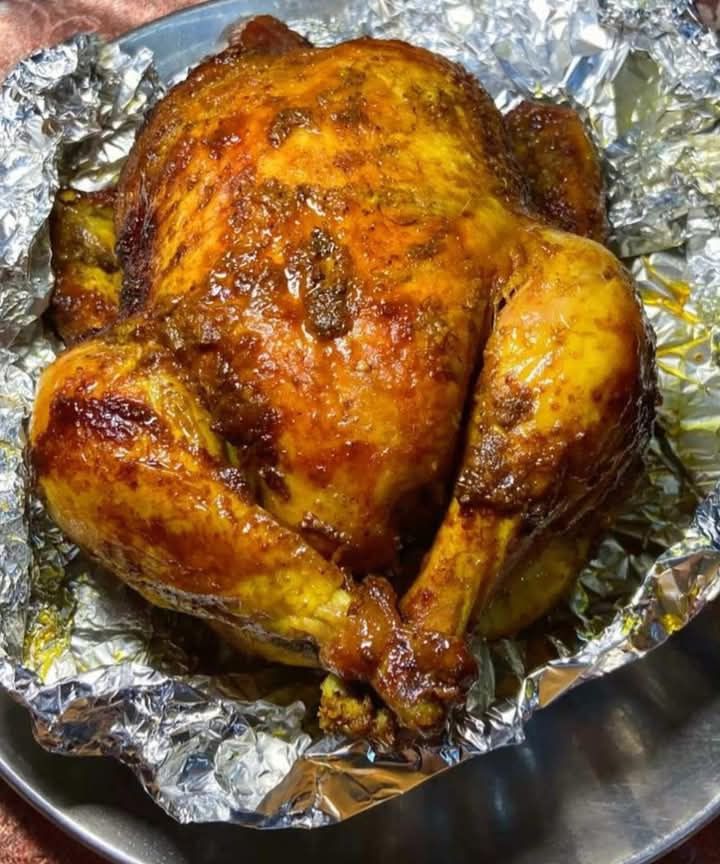
- Preheat and prepare: Preheat the oven to 190°C (375°F). Position a rack in the middle of the oven. Line a roasting pan or rimmed baking tray with foil for easier cleanup and place a wire rack on top if you prefer the chicken elevated.
- Dry the bird: Remove the chicken from packaging and remove any giblets. Pat the chicken thoroughly dry inside and out with paper towels — dry skin is essential for crisping.
- Make the spice rub: In a small bowl combine the oil or melted butter with paprika, garlic powder, turmeric, black pepper, lemon juice, salt, mixed herbs, and optional ginger–garlic paste. Stir to create a smooth paste.
- Season under the skin and cavity: Gently loosen the skin over the breasts by inserting your fingers between skin and meat (be careful not to tear). Rub a portion of the spice mixture under the skin directly onto the breast meat. Rub the remaining mixture all over the exterior of the chicken and inside the cavity. Place the lemon halves, onion, garlic and herb sprig into the cavity if using.
- Optional brine or rest: For juicier meat, brine the chicken for 2–6 hours in a simple salt solution (4 cups water + 2–3 tbsp salt) before patting dry and applying the rub. If not brining, allow the seasoned chicken to rest in the refrigerator, uncovered, for at least 1 hour or up to overnight to let flavors penetrate and the skin dry for better browning.
- Truss (optional): Tie the legs together with kitchen twine and tuck the wing tips under the body. Trussing helps the bird cook more evenly and improves presentation but is optional.
- Roast: Place the chicken breast-side up on the rack or directly on the prepared tray. Roast in the preheated oven for 75–90 minutes, or until an instant-read thermometer inserted into the thickest part of the thigh (without touching bone) registers 74°C (165°F). If the skin is browning too quickly, tent loosely with foil.
- Baste mid-roast (optional): About halfway through roasting (after ≈35–45 minutes), baste the chicken with pan juices to deepen flavor and promote even browning. Frequent basting is not necessary and opening the oven too often will extend cooking time.
- Final browning: For extra-crisp skin, switch the oven to broil for 2–3 minutes at the end of cooking, watching closely to avoid burning.
- Rest before carving: Remove the chicken from the oven and tent loosely with foil. Rest for 10–15 minutes; this allows juices to redistribute and yields moister meat.
- Carve and serve: Transfer to a cutting board. Carve the chicken into breasts, thighs, drumsticks and wings. Spoon pan juices over the carved meat or serve alongside a simple gravy made from the drippings.
Troubleshooting & Consistency Tips
- Skin not crisping: Make sure the skin is as dry as possible before applying the rub; refrigerate uncovered for an hour or more to dry the skin. Use high heat (190°C/375°F) for roasting and finish with a short broil if needed.
- Overbrowned exterior but undercooked inside: If the bird browns too quickly, tent it loosely with foil and continue roasting until the internal temperature reaches 74°C (165°F).
- Dry breast meat: Avoid overcooking. Remove the chicken when the thigh reaches 74°C (165°F); the breast will be fully cooked by that time. Resting also helps keep meat juicy.
- Undersalted flavour: Season generously and, if brining, reduce added salt in the rub. Taste pan juices when making gravy and adjust seasoning.
- Pale color: Paprika helps with color; turmeric gives golden hue but use sparingly to avoid bitterness. A light brush of melted butter before roasting enhances color.
Variations & Serving Ideas
- Herb butter roast: Mix softened butter with minced garlic, lemon zest and fresh chopped herbs (thyme, rosemary, parsley) and spread under the skin instead of the oil-spice rub.
- Spicy citrus: Add 1 tsp cayenne pepper to the rub and increase lemon zest for a brighter, spicier profile.
- Middle Eastern style: Add ground cumin, coriander and a pinch of cinnamon to the rub and serve with sumac-dressed salad and rice.
- One-pan meal: Roast the chicken on a bed of potatoes, carrots and onions so vegetables cook in the pan juices and are ready to serve.
Storage & Make-Ahead
Leftover roast chicken keeps well refrigerated: store in an airtight container for 3–4 days. To freeze, remove meat from bones and freeze in portions in airtight containers or heavy-duty freezer bags for up to 3 months. Thaw overnight in the refrigerator before reheating.
Reheat gently in a low oven (160°C / 325°F) covered with foil until warmed through, or reheat slices in a skillet with a splash of stock or butter to preserve juiciness. Use leftovers for sandwiches, salads, soups, or fried rice.
Why This Recipe Works
The combination of a dry surface, a flavorful fat-based rub and sustained high heat encourages Maillard browning for a crisp, golden skin. Turmeric and paprika provide color without overpowering flavor; lemon juice adds acidity that brightens and balances the savory spices. Allowing the chicken to rest after cooking lets the muscle fibers relax and reabsorb juices, producing meat that is tender and moist.
Expert Tips
- Use an instant-read thermometer to guarantee doneness. The safe minimum internal temperature for poultry is 74°C (165°F) in the thickest part of the thigh.
- For even cooking, bring a refrigerated chicken closer to room temperature for 20–30 minutes before roasting.
- Reserve pan juices and deglaze with a splash of white wine or stock to make a quick pan sauce or gravy.
- Dry brining (rubbing salt on the skin and refrigerating uncovered overnight) is an easy way to boost flavor and crisp the skin without a wet brine.
- When roasting with vegetables, cut them into uniform sizes so they cook in the same time window as the chicken.
Nutrition (approximate per serving)
Calories: ~380–480; Protein: ~35–45 g; Fat: ~22–30 g; Carbohydrates: ~1–5 g. Values vary by chicken size, whether skin is eaten, and additional sides or gravy.
